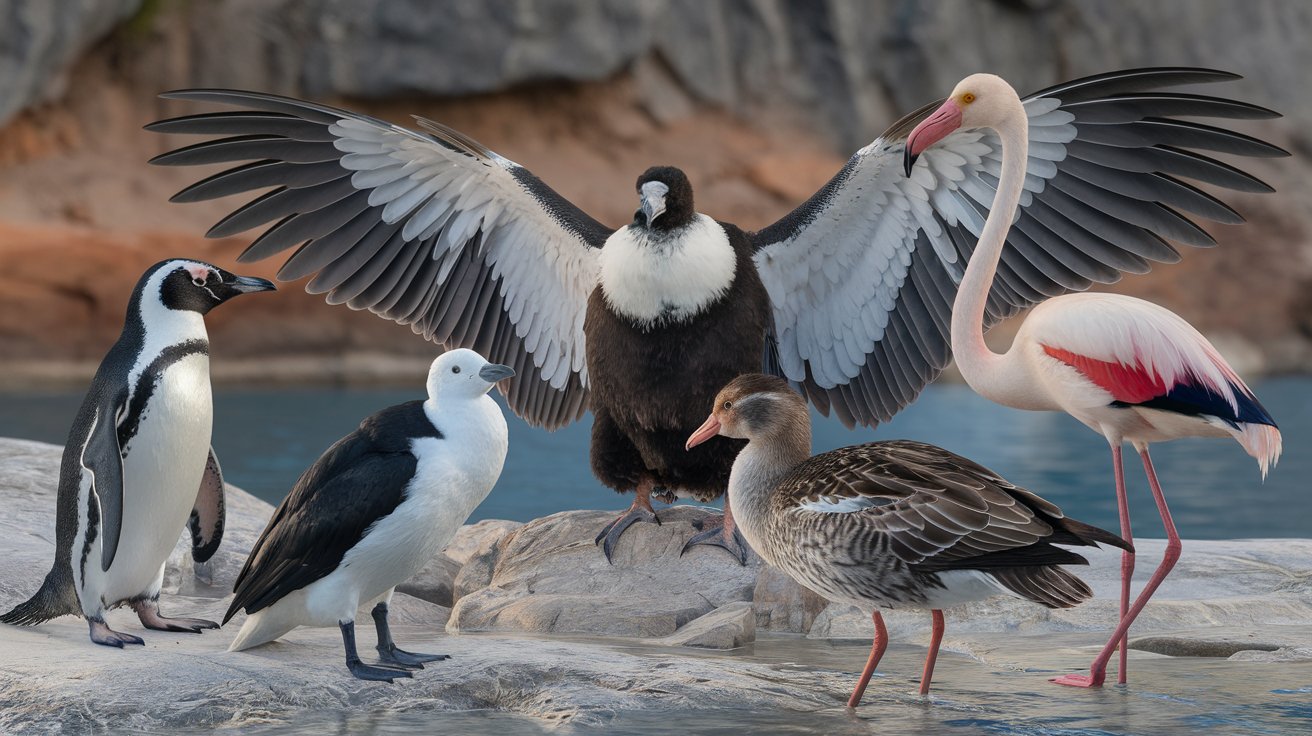
Birds of Patagonia: Complete Guide to 32 Iconic Species
Patagonia hosts over 32 remarkable bird species across its vast wilderness, from the mighty Andean Condor to colorful Austral Parakeets. This remote region spanning Argentina and Chile provides critical habitat for both resident and migratory birds, making it one of South America’s most important birding destinations for wildlife enthusiasts.
Iconic Large Birds of Patagonia
The most impressive birds in Patagonia are undoubtedly its large species that command attention across the landscape. These magnificent creatures have adapted to the region’s harsh conditions and represent some of Argentina’s most recognizable wildlife. From soaring raptors to flightless giants, these birds showcase the incredible diversity that makes Patagonia a premier birding destination.
Understanding these large bird species provides insight into Patagonia’s unique ecosystem and the conservation challenges facing this pristine wilderness. Each species plays a crucial role in maintaining the delicate balance of this remote environment.
Andean Condor – Patagonia’s Largest Bird
The Andean Condor stands as Patagonia’s largest bird with a wingspan reaching up to 10.5 feet, making it one of the heaviest flying birds globally. These magnificent scavengers soar effortlessly across Patagonian peaks, utilizing thermal currents to cover vast distances while searching for carrion. Current population estimates indicate approximately 6,700 Andean Condors remain in the wild, with Patagonia hosting a significant portion of this vulnerable species.
Lesser Rhea – The Giant Flightless Bird
The Lesser Rhea represents Argentina’s giant flightless bird, standing up to 3 feet tall and weighing up to 55 pounds. These ostrich-like creatures inhabit Patagonia’s grasslands and scrublands, where males incubate eggs and raise young in elaborate ground nests. Recent surveys show stable populations across Patagonia, though habitat fragmentation poses ongoing concerns for this remarkable species.
Patagonian Raptors and Birds of Prey
Patagonia’s diverse raptor community includes specialized hunters perfectly adapted to the region’s open landscapes and varied terrain. These birds of prey demonstrate remarkable hunting strategies and play essential roles as apex predators in Patagonian ecosystems. From caracaras to buzzard-eagles, each species occupies distinct ecological niches across this vast region.
The abundance of small mammals and birds throughout Patagonia supports healthy raptor populations, making this region particularly important for bird of prey conservation efforts in South America.
Southern-crested Caracara
The Southern-crested Caracara serves as Argentina’s national bird and one of the most common raptors throughout Patagonia. These intelligent scavengers display remarkable adaptability, feeding on everything from carrion to insects while demonstrating problem-solving abilities that rival corvids. Their distinctive crested appearance and bold behavior make them easily recognizable across Patagonian landscapes.
Black-chested Buzzard-eagle
The Black-chested Buzzard-eagle represents one of Patagonia’s most powerful raptors, capable of taking prey as large as young guanacos and rheas. These impressive hunters soar on broad wings across mountain valleys and open plains, utilizing keen eyesight to locate prey from considerable distances. Their presence indicates healthy ecosystem conditions throughout their Patagonian range.
Patagonian Seabirds and Coastal Species
Patagonia’s extensive coastline supports diverse seabird populations that depend on the region’s rich marine ecosystems. These species demonstrate remarkable adaptations to harsh coastal conditions and serve as important indicators of ocean health. From penguins to cormorants, coastal birds represent some of Patagonia’s most beloved and photographed wildlife.
Magellanic Penguins
The Magellanic Penguin colonies in Patagonia represent some of the largest concentrations of these charismatic seabirds, with Peninsula Valdes hosting over 200,000 breeding pairs annually. These medium-sized penguins migrate thousands of miles between breeding and feeding grounds, demonstrating remarkable navigation abilities. Climate change and fishing pressure pose increasing challenges to their long-term survival.
Rock Cormorants and Dolphin Gulls
Rock Cormorants thrive along Patagonia’s rocky coastlines, where they dive for fish in kelp forests and shallow bays. These sleek diving birds often share habitat with Dolphin Gulls, creating dynamic coastal bird communities. Recent monitoring shows stable populations, though plastic pollution and fishing net entanglement represent ongoing conservation concerns for these coastal species.
Patagonian Water Birds and Wetland Species
Patagonia’s numerous lakes, rivers, and wetlands support spectacular water bird diversity including some of the most colorful species in the region. These aquatic habitats provide critical stopover points for migratory species and year-round homes for resident populations. Wetland conservation remains essential for maintaining these important bird communities.
Chilean Flamingos
Chilean Flamingos create stunning spectacles across Patagonian salt lakes and alkaline wetlands, with flocks sometimes numbering in the thousands. These filter-feeding birds require specific water chemistry to thrive, making them vulnerable to climate change and mining activities. Their presence indicates healthy wetland ecosystems throughout their range.
High-Altitude Lake Birds
The high-altitude lakes of Patagonia support specialized waterfowl adapted to extreme conditions, including various duck species and grebes. These birds endure harsh winters and strong winds while taking advantage of productive lake ecosystems. Understanding their ecology helps inform conservation strategies for Patagonia’s fragile mountain environments.
Forest Birds of Patagonia
Patagonia’s ancient forests harbor unique bird communities found nowhere else on Earth, including endemic species that have evolved in isolation over millions of years. These woodland habitats support everything from tiny hummingbirds to large woodpeckers, creating complex ecosystems that require specialized conservation approaches.
Austral Parakeet
The Austral Parakeet represents the world’s southernmost parrot, thriving in Patagonia’s beech forests despite harsh winter conditions. These colorful birds feed on seeds and fruits while demonstrating remarkable cold tolerance for tropical-origin species. Their populations remain stable, though deforestation poses localized threats to breeding habitats.
Austral Pygmy Owl
The Austral Pygmy Owl ranks among Patagonia’s smallest raptors, yet these fierce hunters successfully take prey larger than themselves. These forest specialists require old-growth trees for nesting while hunting small birds and mammals in dense woodland understories. Their presence indicates healthy forest ecosystems throughout their range.
High-Altitude and Mountain Birds
Patagonia’s towering peaks and alpine environments support specialized mountain bird communities adapted to extreme altitudes and harsh weather conditions. These species demonstrate remarkable physiological adaptations including enhanced oxygen processing and specialized feather structures for insulation. Mountain ecosystems remain particularly vulnerable to climate change impacts.
Dark-bellied Cinclodes
The Dark-bellied Cinclodes exemplifies high-altitude adaptation in Patagonian mountains, foraging along rocky streams and alpine meadows up to 13,000 feet elevation. These hardy songbirds build nests in rock crevices while feeding on invertebrates found in harsh mountain environments. Their specialized lifestyle makes them excellent indicators of alpine ecosystem health.
Alpine Zone Specialists
Alpine zone birds in Patagonia face extreme temperature fluctuations and limited food resources, leading to unique behavioral adaptations including seasonal migrations between elevations. These species require intact mountain corridors for successful breeding and survival, making habitat connectivity crucial for conservation efforts.
Best Birding Locations in Patagonia
Patagonia offers world-class birding opportunities across diverse habitats from coastal plains to alpine peaks, with each location providing unique species assemblages and viewing experiences. Strategic location selection maximizes bird diversity encounters while supporting local conservation efforts through responsible ecotourism.
The most productive birding sites combine multiple habitat types within accessible areas, allowing visitors to observe the full spectrum of Patagonian avian diversity during single trips.
Conservation Status and Threats
Bird conservation in Patagonia faces multiple challenges including climate change, habitat fragmentation, and human development pressure. Recent assessments indicate that while many species maintain stable populations, several face declining trends due to environmental pressures. Collaborative international efforts between Argentina and Chile focus on protecting critical habitats and migration corridors.
The most significant threats to Patagonian birds include renewable energy development, mining activities, and invasive species introduction, requiring comprehensive management strategies to ensure long-term species survival.
Related video about Birds of Patagonia
This video complements the article information with a practical visual demonstration.
What you should know
What is the big bird in Patagonia?
The Andean Condor is the largest bird in Patagonia, with a wingspan reaching up to 10.5 feet. This magnificent scavenger soars across mountain peaks and represents one of the world’s heaviest flying birds, playing a crucial role in Patagonia’s ecosystem as a apex scavenger.
What is Patagonia’s largest bird?
The Andean Condor holds the title as Patagonia’s largest bird by wingspan and weight. These impressive raptors can weigh up to 33 pounds and utilize thermal currents to soar effortlessly across vast distances while searching for carrion throughout the region.
What is the most common bird in Argentina?
The Southern-crested Caracara is among the most common and widespread birds in Argentina, including Patagonia. This adaptable raptor serves as Argentina’s national bird and thrives across diverse habitats from grasslands to urban areas, displaying remarkable intelligence and problem-solving abilities.
What are the giant birds in Argentina?
Argentina’s giant birds include the Andean Condor (largest flying bird), Lesser Rhea (largest flightless bird standing 3 feet tall), and Black-chested Buzzard-eagle. These impressive species represent some of South America’s most magnificent avian wildlife, each adapted to specific Patagonian habitats.
When is the best time to see birds in Patagonia?
The best time for birding in Patagonia is during austral spring and summer (October through March) when most species are breeding and migratory birds are present. This period offers optimal weather conditions and maximum bird activity across all habitats from coastal areas to mountain forests.
How many bird species live in Patagonia?
Patagonia hosts over 200 bird species including 32 iconic species that define the region’s avian diversity. This includes endemic species found nowhere else on Earth, making Patagonia one of South America’s most important birding destinations for both residents and migratory species.
| Bird Category | Key Species | Conservation Priority |
|---|---|---|
| Large Raptors | Andean Condor, Black-chested Buzzard-eagle | High – Habitat protection critical |
| Seabirds | Magellanic Penguin, Rock Cormorant | Medium – Marine protection needed |
| Forest Species | Austral Parakeet, Austral Pygmy Owl | High – Old-growth forest dependent |
| Water Birds | Chilean Flamingo, Various Waterfowl | Medium – Wetland conservation focus |